Sport for development can play a vital role in improving a sense of place, identity and belonging for individuals and communities, therefore underpinning national efforts to recover from Covid-19, level up communities, and tackle health and societal inequalities.
That was the over-arching sentiment, underscored by numerous speakers, at the Sport for Development Coalition’s recent ‘Spotlight on 2022’ annual forum which focused on 'Recovery & Relevance: Reshaping sport for development'. The forum provided an opportunity to reflect on progress over the previous year, and set the Coalition’s priorities for 2022, as well as enhancing connectivity across the ‘movement’.
Since the Government published its Levelling Up White Paper at the start of February, much attention has been paid to the need for physical regeneration and investment in the infrastructure of towns and communities which face deprivation and disadvantage due to ‘geographical inequalities’ – in other words, different standards of living in different areas of the UK.
IDENTITY
However guest speaker Danny Kruger MP, who is Parliamentary Private Secretary for the Department of Levelling Up, Housing and Communities, told the annual forum that just as much focus needs to be given to the “real challenge of levelling up which concerns identity and sense of place”.
Speaking a few days before the White Paper was published, he said: “There’s a recognition that for many decades, there’s been a great focus in policy for supporting what we now call left-behind areas - which is all around physical infrastructure, economic redistribution, large transfers of wealth, whether that is capital or sort of revenue spending, services and welfare.
“That in itself, while necessary and often useful, is insufficient to the real challenge of levelling up, which concerns identity and sense of place is much as it does the economic infrastructure of a region.”
The MP, who led the Government-commissioned review of civil society in 2020, explained that there now exists “a strong focus” on places and people amongst policy-makers. “It should be possible to live the life you want in the place that you love,” he said. “Our towns, our regions, our coastal communities, our rural places have enormous livability and enormous quality of life potentially if they have the right social infrastructure and cultural infrastructure, which is why sporting facilities and activities are so important.”
He added: “The other great theme here for me is around belonging and what I call the ‘gathering places’ of communities.
“Where and how do people come together to make common cause? Which might just be sociable, in fact often that’s the best (reason) where people come together ostensibly for social reasons, or for a past-time, and sport is possibly the pre-eminent one in our society.
VALUE
“So you get people coming together for sport and out of that they form plans organically and informally to co-operate and to collaborate. There is great social and economic value in providing these gathering spaces that sport does.
“The other pillar of Levelling Up is around people, whether we are thinking of specifically about skills or about health. “We recognise the enormous contribution sporting infrastructure plays here, most obviously in promoting personal health, but also in helping young people and people of all ages to develop the skills they will need in the modern workplace because we now know that they skills that we are going to need are not the ones you can be taught in a very formal, technical sense.
“As technology develops, the skills that are going to be uniquely important and useful to people to get ahead in their careers are going to be the interpersonal skills, and working with people successfully. They are the requirements of character as much as technical expertise that are going to have a premium in the jobs economy of the future.
“Again, the role of sport in that is significant.”
The forum opened with a 'Thought Starter' panel of key speakers including Catherine Anderson, Executive Director of London Marathon Charitable Trust; Dr William Bird, CEO of Intelligent Health, and Bradley Pritchard, founder of Sporting Way CIC and former professional footballer. The panel led a discussion on the importance of collective action in addressing the most pressing health and societal inequalities, and how sport for development can achieve scaled impact in order to tackle these challenges and support the Levelling Up agenda over the coming years.
Covid “exposed the fact” that the UK faces deeply-embedded inequalities, according to Dr William Bird. “It creates huge problems with mental health, it causes problems of physical health as well and people feel they get left behind,” he said. “We have to deal with that and we also note sport and physical activity is a way of trying to mend that and build together and actually, being outdoors in nature… has been shown to level people up.”
Catherine Anderson said sport for development, with its value to multiple policy areas could help to act as a “neutral convening power” which can help to bring stakeholders and departments together on shared issues, while Bradley Pritchard claimed the Levelling Up agenda presented an opportunity for policy-makers to create greater connectivity and opportunities to listen to communities.
HUMILITY
This will require “a certain level of humility”, he added, and being “willing to listen to groups, and also off the back of that being quite adaptable, not necessarily attached to an outcome but more so the journey and having to change”.
Catherine said this was an important point for the Sport for Development Coalition to consider if it is to deliver on its mantra of collective action. “If a Coalition is going to be really effective in achieving its mission, it also needs to acknowledge we all do different things, firstly, and that we don’t serve one another well by replicating but we need to be quite humble about what we can and cannot do but quite ambitious collectively.”
Dr William added: “What is our aim or vision, is it about getting people more active or is it creating a better society? I think if we just talk about physical activity, again, we are talking about a symptom.
“That’s why the Coalition is so important and the political will has got to be really understanding about the root causes of this, and dealing with it. If you create a really cohesive, strong community, physical activity will flow; you almost don’t have to do much because people will be outdoors, wanting to walk, (or) set up football teams for children.”
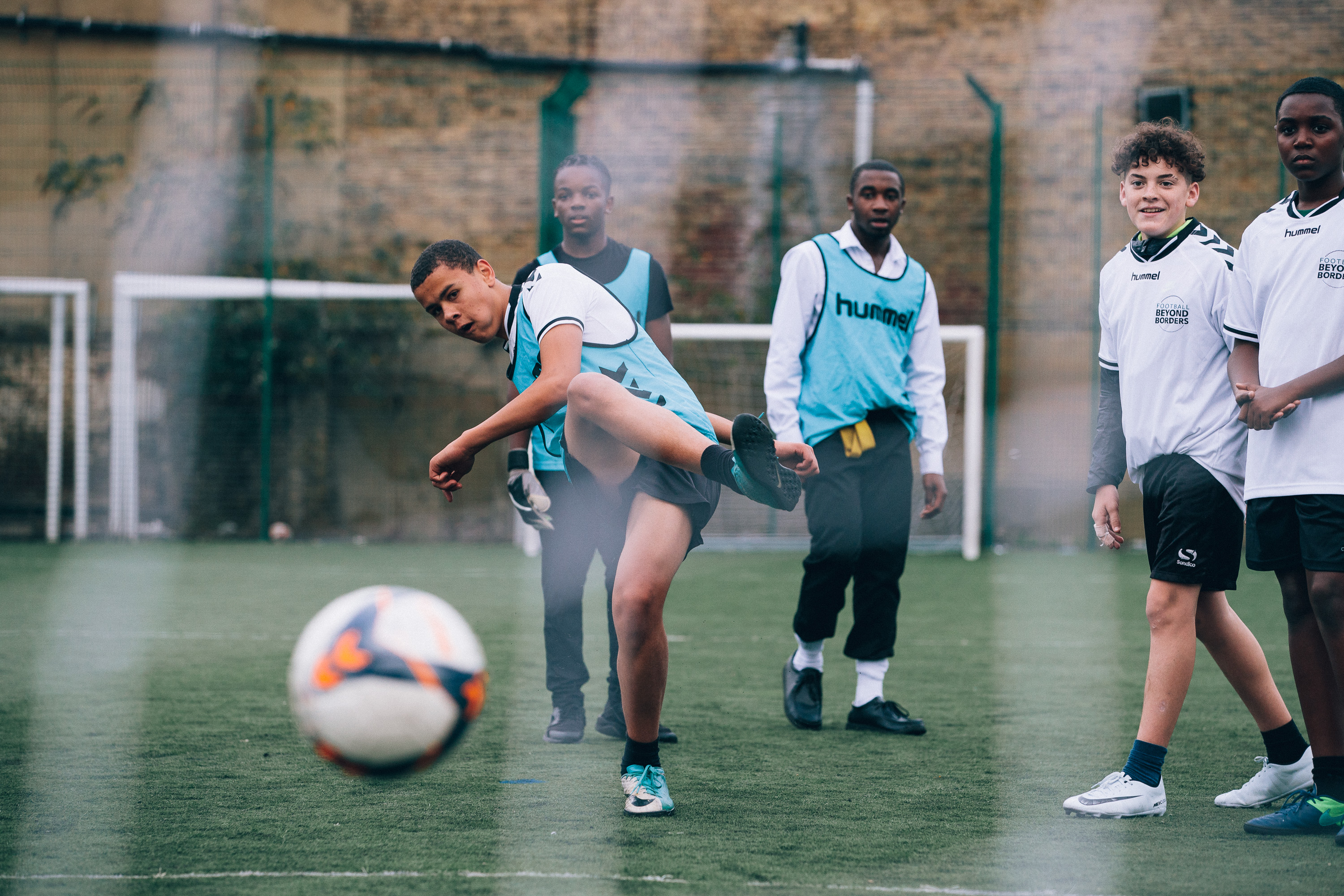
Spotlight on 2022 also brought together contributors to the Coalition’s groups and activities, including its Policy Working Group which focuses on how member organisations can work collectively to create an enabling policy environment where more policy-holders and decision-makers understand and appreciate the multiple returns on investment and significant cost savings which can be achieved through well-designed sport-based interventions.
Mark Lawrie, the CEO of StreetGames, is Co-chair of the Policy Advisory Group. He said: “I think one really important thing from my perspective is there is a real mix of voices. So we do have national organisations, like ourselves and the Sport & Recreation Alliance and others, but equally we had smaller local organisations with that real local, lived experience, which I think is incredibly important to our collective policy action.”
More than one third of the Coalition’s 200-plus member organisations are currently actively involved in its governance through participation or support for its Board, sub-committees, and working or advisory groups. The Coalition is a growing network of more than 200 VCSE (voluntary, community and social enterprise) groups, networks and sports bodies over-arching thousands of projects and programmes intentionally using sport to generate positive social outcomes across the UK.
- VIDEO: Replay the Spotlight on 2022 annual forum
- GET INVOLVED with the Sport for Development Coalition